Bringing Clinical Media Into AI-Simulated Patient Encounters
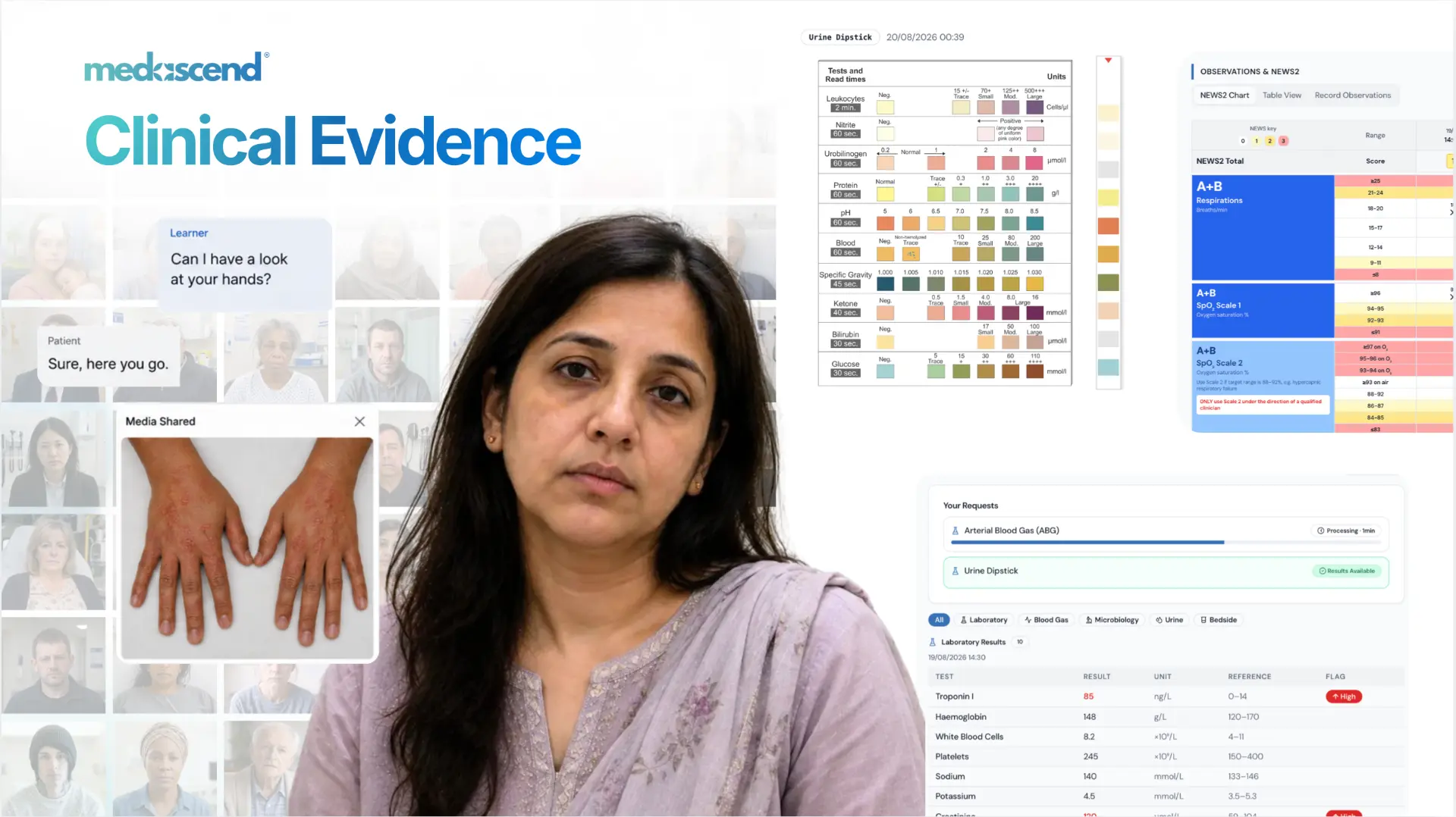
MedAscend simulated patients can now share relevant clinical media during a consultation, so learners have to recognise what information they need and actively ask for it.
Clinical consultations rarely rely on conversation alone.
A patient may describe a rash, but a clinician will want to see it. A wound may need to be inspected. A patient might have a photograph showing how their symptoms have changed. In real clinical practice, what a healthcare professional can see often changes the questions they ask, the decisions they make and how the consultation progresses.
That is why MedAscend simulated patients can dynamically share relevant clinical media during a consultation.
Making simulated consultations more responsive
During a MedAscend consultation, learners interact directly with an AI-simulated patient, relative or healthcare professional.
Rather than clinical media simply being presented to the learner at the beginning of a scenario, it can form part of the interaction itself.
For example, a learner might ask:
"Can I see the rash?"
The simulated patient can then respond and reveal the relevant clinical image within the consultation.
The same principle can be applied across different scenarios and types of clinical media, allowing information to become available when the learner appropriately seeks it.
This creates an important distinction: learners are not simply being given all of the information required to solve a case. They have to recognise what information they need and actively obtain it.
From history taking to information gathering
Effective clinical practice involves more than asking the right questions.
Learners need to recognise when further information is required, request it appropriately, interpret what they are presented with and incorporate it into the rest of the encounter.
By integrating clinical media directly into simulated consultations, educators can create scenarios in which learners need to decide when and why they need to see something, rather than passively receiving it.
This can support scenarios involving:
- Dermatological presentations and skin changes - Wounds and postoperative reviews - Swelling, bruising and other visible findings - Patient-provided photographs - Charts, documents and other relevant clinical media
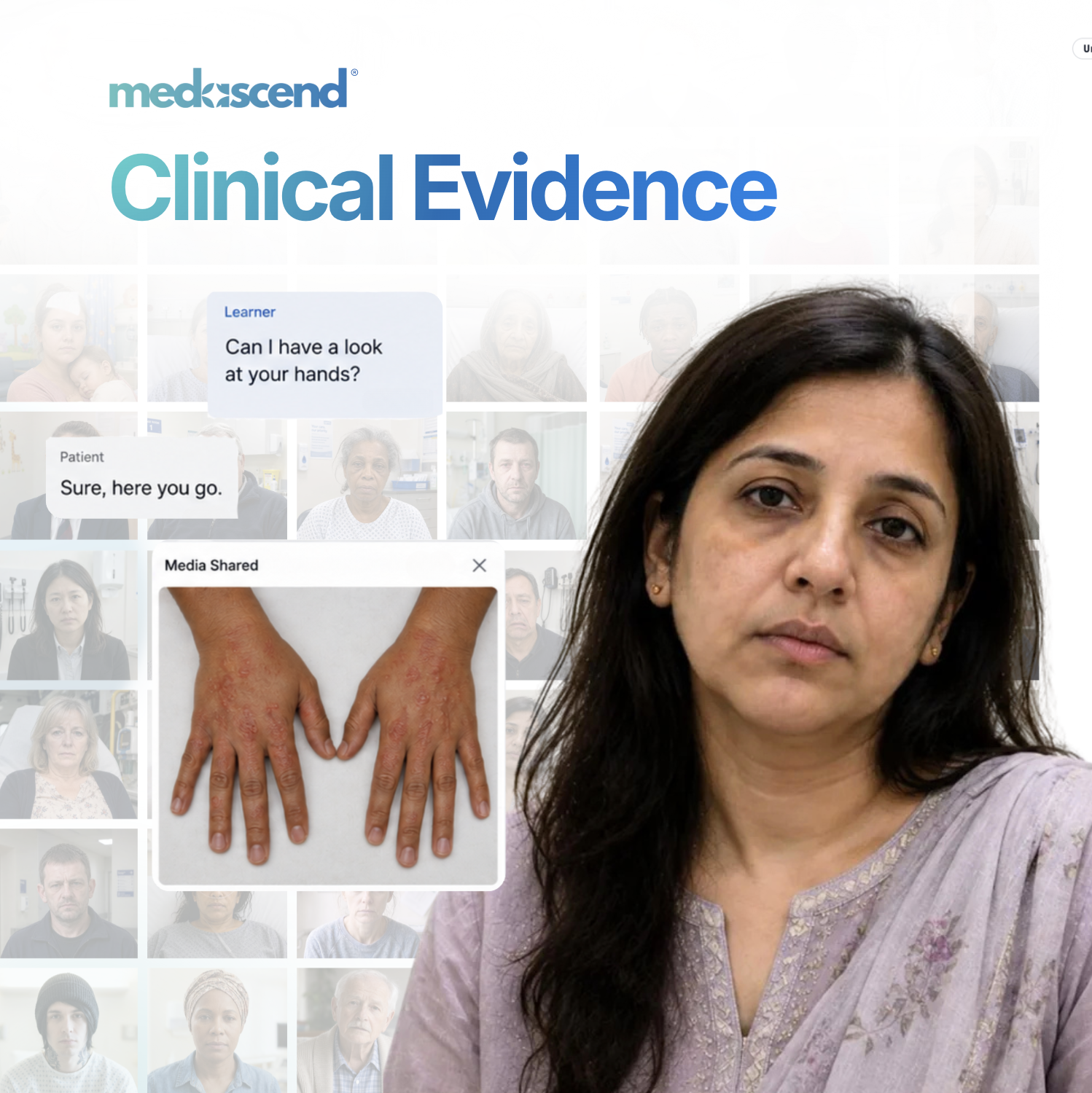
The media available can be configured around the individual scenario, giving educators control over what learners can access during the encounter.
Part of a wider clinical encounter
Media Calling is one component of MedAscend's broader approach to clinical simulation.
A learner might begin by speaking with a simulated patient, request and review relevant clinical media, access observations and investigations through the integrated Patient Record, document their assessment, prescribe medication, make a referral or escalation call, and then receive structured feedback on their performance.
The aim is to move beyond isolated communication practice towards simulations that better represent the wider clinical workflow surrounding a patient encounter.
Giving educators control
Educators can build and adapt MedAscend scenarios around their own learning outcomes, including the information and media learners should encounter.
This means the same functionality can be used very differently depending on the programme, specialty, learner level and educational objective.
Rather than defining a single pathway through a case, educators can create scenarios where learners must explore the presentation and determine what information is relevant for themselves.
See it in action
MedAscend supports healthcare programmes across multiple disciplines with AI-simulated clinical encounters, integrated Patient Records, clinical tasks, assessment and feedback.
Educators and institutions can access a free 28-day trial of MedAscend to explore the platform with their learners and teaching teams.