
Mark every encounter.
Quote every word.
Your rubric, scored against the learner's actual transcript. Each domain comes back with the moments that earned the marks, the moments that didn't, and what to do next. Faculty get evidence they can stand behind.
Personalised Feedback
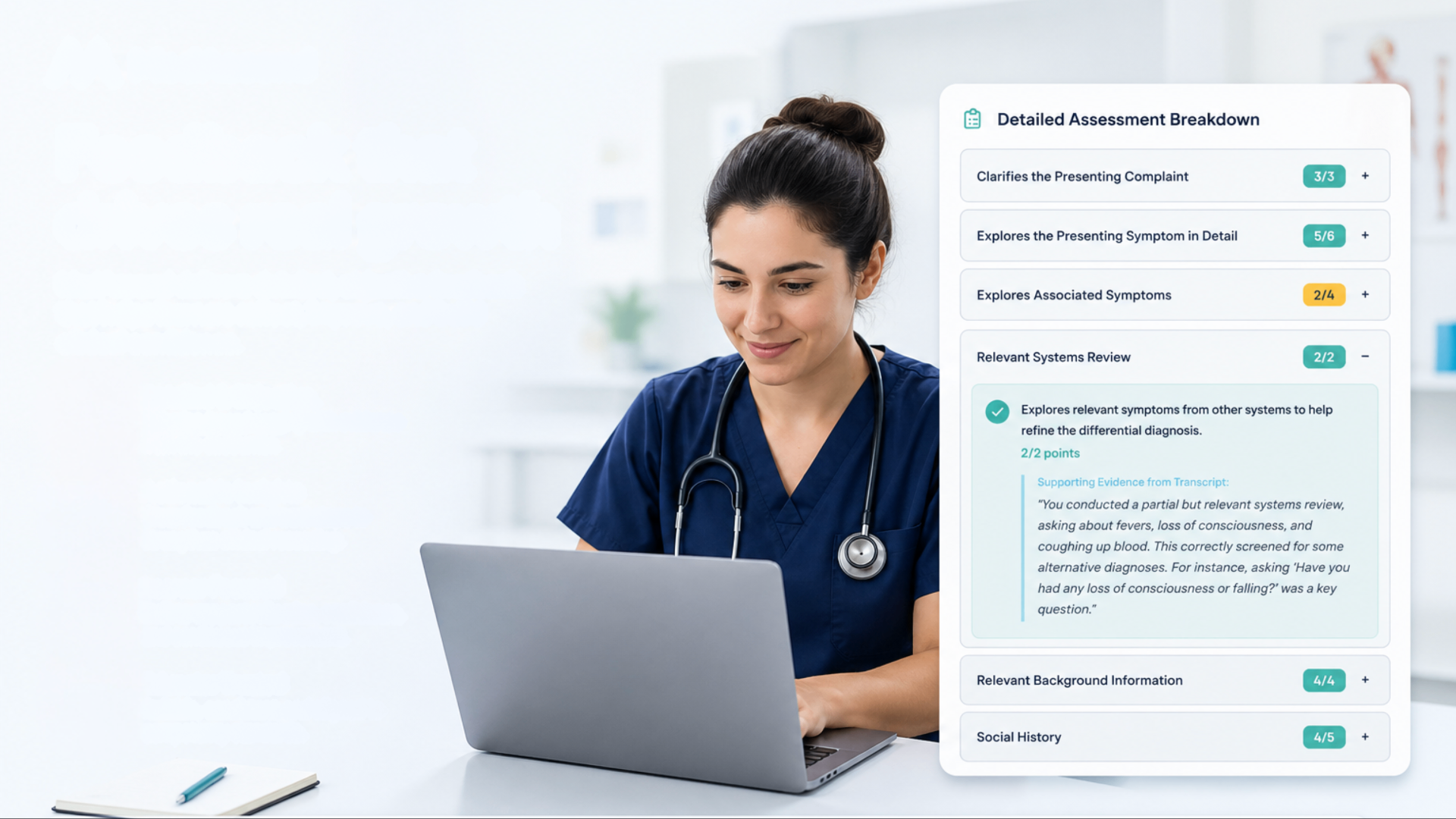
Every encounter marked against your rubric, the moment it ends. Each learner gets evidence-linked, domain-scored feedback written for them, with quoted moments, plain-language explanations and ranked next steps, feedback they actually act on, that holds up under faculty scrutiny.
- Domain scores with quoted moments from the encounter
- Plain-language explanations and ranked next-step actions
- Returned the moment the encounter ends, at zero marker cost
Next steps
Practise structured symptom progression questions in your next history-taking station.
Clinical Information Gathering
21/24 pointsWhat Went Well
Thorough exploration of the cough, onset, duration and severity all covered. You also picked up two red flags (haemoptysis, weight loss) and reflected them back to the patient to confirm.
Areas for Improvement
You did not establish whether the cough is getting better, worse or staying the same. Smoking history and occupational exposure were also not asked about, both important for your differential.
How to improve: after establishing duration, ask “Has it been getting worse, better, or staying the same?”
Detailed Assessment Breakdown
Marked transcript
Every line, scored against your rubric.
The full transcript with rubric-aligned feedback chips beneath each turn with strengths and gaps tied to the learner's exact words.
Full Transcript
Post-encounter questions
Written answers, analysed in context.
The full transcript with rubric-aligned feedback chips beneath each turn with strengths and gaps tied to the learner's exact words.
What is the most likely diagnosis?
Clinical tasks & media
Examinations, bloods, ECG and urinalysis.
Investigations sit alongside the encounter, learners interpret real media and structured data, mirroring the workflow they'll see in clinic.
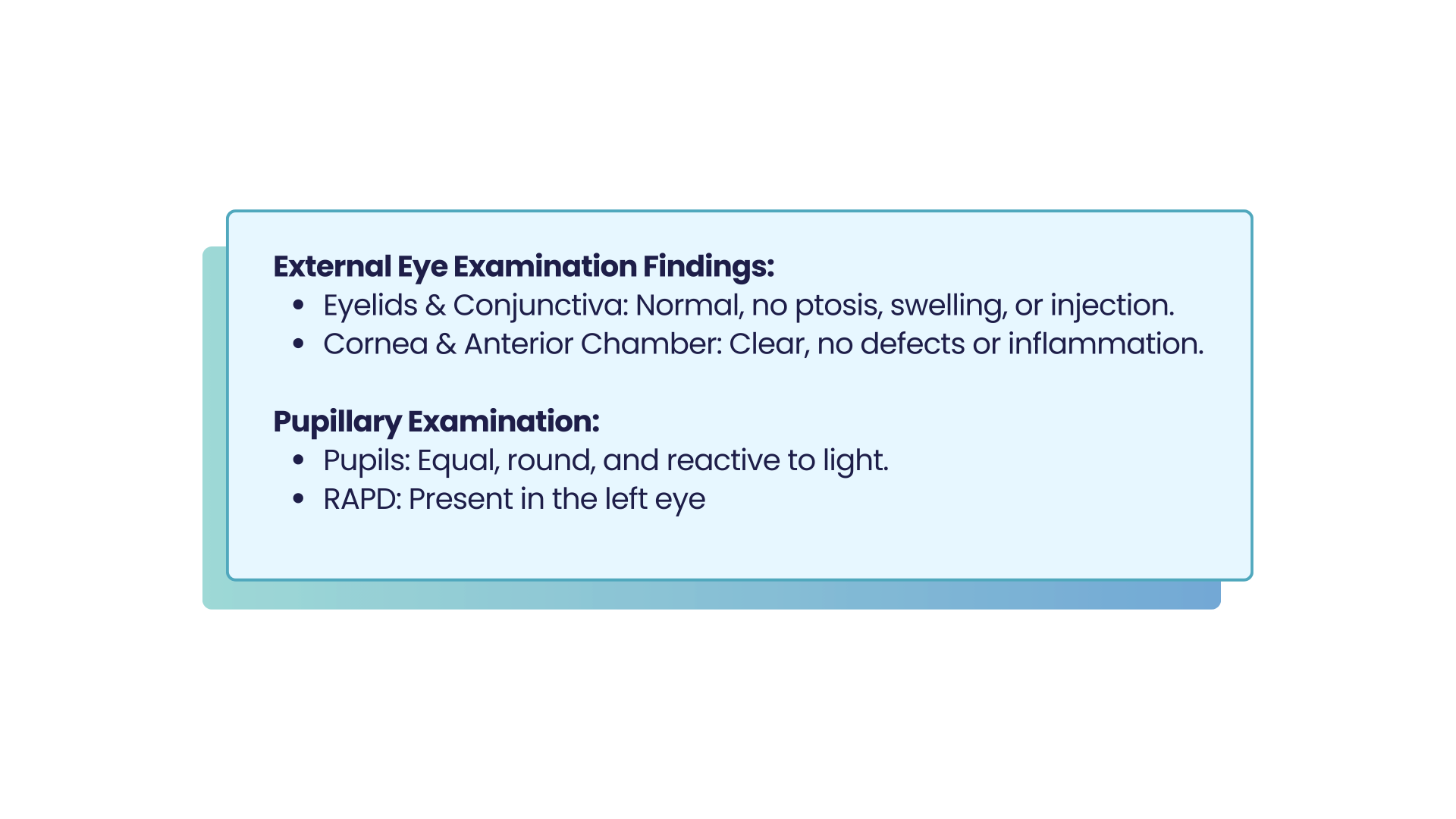
Please interpret these examination results and suggest your next steps in management for this patient.
Meet the AI Tutor Debrief
Learners talk through their feedback with an AI tutor that knows their encounter, ask why a mark was missed, request clarifications, or rehearse the moment again. Like a tutor present at every review, at zero faculty cost.
See it in your context.
Book a 30-minute walkthrough with our team. We'll tailor the demo to your discipline, rubric and rollout.